
Like all of us, Thomas Young has witnessed the rise of what you might call a consciousness culture — people wanting to know where their food is sourced, who’s making their clothes, what’s going into their electronic devices.
The way he sees it, there’s another important step for all of us to take, and it has to do with understanding where our pets come from.
“It’s even more important in some ways,” he says, “because the commodity here is a living, breathing thing.”
The idea of pet as commodity is foreign to many of us. But that’s exactly the point. When it comes to dog breeding in particular, little puppies amount to big business — even if its magnates don’t operate out of Wall Street skyscrapers, or run commercials on TV.
Large-scale, proIit-oriented breeding operations known as puppy mills send 2 million dogs into American homes each year. But because they operate off the radar and use pet stores as middlemen, Young says, “Most people don’t know what a puppy mill is.
“Most people have no concept of puppies being created the way they are, and the terrible conditions. Most people think, ‘It’s a dog breeder,’ and just like anything else, animals are well-kept and taken care of and they’re bred, right?
“This is a very different thing.”
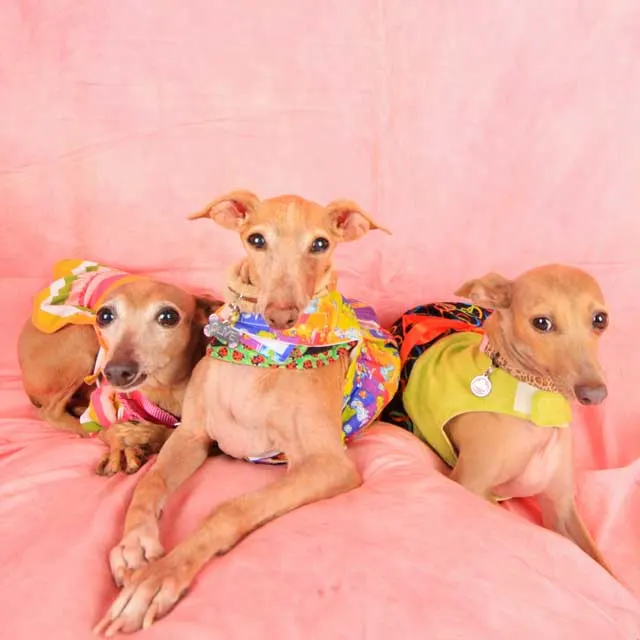
As Executive Producer of the Iilm A Voice for Lil Olive, Young has assumed a leading role in showing just how different that reality is. Lil Olive, the Italian greyhound at the heart of the documentary, spent 12½ years in a Missouri puppy mill. While producing litter after litter of puppies, she endured conditions that Young says would register as an 8 or 9 on a 1-to-10 scale of harshness.
Until she was rescued and then adopted by Pam Horton, she was never someone’s pet. Which is particularly cruel when you consider that dogs like her can’t thrive as anything but someone’s pet.
“Dogs, and to some extent cats, are the only animals on the planet that have been shaped in our image,” Young says. “Especially dogs. Because of breeding and
breeding habits over the years, we’ve created a species of animals completely dependent on us. And we have a responsibility for that creation.
“What puppy mills have done, they’ve basically abused that responsibility in the pursuit of an economic return.”
Often, the government needs to step in to end that type of abuse. Young says it’s already starting to happen in some states and countries, which gives him real hope. But because legislators often don’t act until constituents push them, making change means raising awareness.
Young — who cites a passion for making the world “a better place for dogs, cats and people” — is careful to point out that not all pet stores sell mill dogs. But it’s hard, if not impossible, to know which ones are being honest when they claim as much. And, he says, “It still doesn’t justify the fact that there are over 10,000 puppy mills left, or that pet stores on the whole continue to provide the demand that creates the supply.”
Alternatives include animal shelters and rescue groups. Breeders who welcome visits and are invested in vetting their customers also deserve our consideration.
Though it may not have made its way into mainstream discussion yet, plenty more information is available on this topic. You can look to the Humane Society of the United States, the American Society for Prevention of Cruelty to Animals, and, later this year, to A Voice for Lil Olive.
“Ultimately,” Young says, “I think that this movie is about the responsibility of being a pet owner, and the responsibility that comes with bringing a pet into the family. And part of that responsibility is knowing where that pet comes from, and what you’re contributing to in a bigger picture when you adopt a dog.”
— Kirk Woundy