
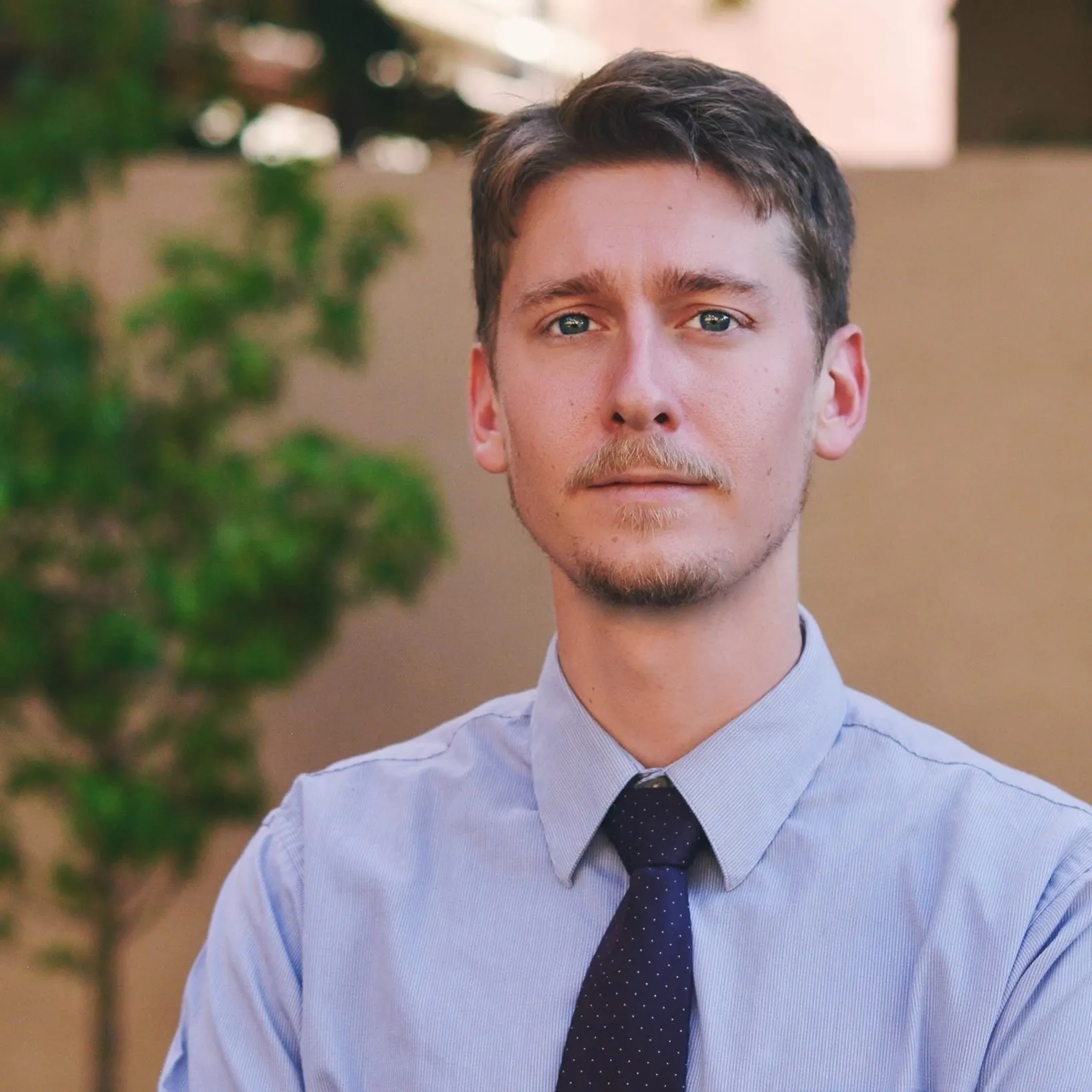
 As you may have heard on , the team behind A Voice for Lil Olive spent a couple of days filming this week. In the middle of about 20 people was Alex Riegelmann, who as line producer connects the creative team and those lesser-known on-set professionals who turn creative vision into reality.
Though he’s only 25, Riegelmann estimates he’s served as line producer (or unit production manager, a similar title) on about a dozen film projects. He’s also handled a host of other film jobs both in his hometown of Colorado Springs and in Los Angeles. So he speaks knowledgeably and passionately about the extent to which producing a film like A Voice for Lil Olive is a team effort.
“People don’t realize that before the camera is even rolling, 90 percent of the work has to be completed,” Riegelmann says. “And that 90 percent is done by people like grips and gaffers and production assistants and the crafts department.”
In the interest of education — and in giving credit where it’s due — we asked Riegelmann to explain some of those roles, starting with the production assistants he manages.
Production assistants (PAs): “These are people who … do whatever needs doing — stuff like setup, tear-down. They’ll help with lights, they’ll help with bringing supplies. Say we’re missing a piece of equipment; it’s, ‘Hey guys, we need to do a Walmart run,’ or whatever. They’re basically hired hands of the production. You always have PAs on any shoot, pretty much.”
Gaffer: “The gaffer is a lighting specialist. It’s someone who sets up the lights and makes sure they are positioned correctly according to the director of photography’s needs.”
Grips: “The people who follow the gaffer’s instructions to actually [use] the lighting equipment. Because there’s a lot of equipment, there’s a lot of electricity, a lot of stuff to be managed, and it is a very specialized job. It’s not just grunting and moving shit. You’re dealing with tens of thousands of volts of electricity, and light bulbs that at any moment could explode and turn into flying, molten glass shrapnel. So it’s a very, very important job and it takes a specialized technician to do it.”
Director of photography (DP): “He essentially is in charge of the camera. He frames the shots, operates the camera physically, will do things like determine a zoom rate, determine if the white balance is correct, make sure that the camera’s settings are right. Then he has a personal assistant, called the AC, or assistant camera.”
Assistant camera (AC): “The AC is also a specialized position, because the AC has to know exactly how the camera works. The AC does things like change out lenses, [or] operate the focus when the DP is in the middle of a shot. … The AC’s the one actually operating the controls. So you look at them as having kind of a pilot/co-pilot relationship, and the aircraft in this case is the camera.”
Crafts: “Crafts is basically catering. When you’ve got this set full of people who are doing hard work, who need sustenance — coffee, water, chips — it’s an important part of production.”
Of course, all of these folks technically answer to the director. (“He’s the one guy that no one can say ‘No’ to,” Riegelmann says.) But in a movie like Lil Olive, everyone on set — from the director on down — is actually working in service of the story.
“We’re making a documentary,” Riegelmann says. “We’re not making Planet of the Apes, we’re not making War of the Worlds or something. We are making a film that’s about something real. And so the real thing is the subject that’s important.”